

Full and Partial Dentures in Ste. Genevieve, MO
Replacing Missing Teeth with Practical Options
Dentures can help replace multiple missing teeth and support everyday functions like eating, speaking, and smiling. For some patients, dentures are a practical way to restore a fuller smile when several teeth are missing or when remaining teeth cannot be predictably maintained. At Ste. Genevieve Family Dental Care, denture options are discussed in the context of your oral health, comfort, budget questions, and long-term goals.
A denture should be planned carefully. The number of missing teeth, the condition of the gums, the shape of the jaw, and the health of remaining teeth all affect which option may be recommended. Some patients need a full denture to replace all teeth in an arch. Others may need a partial denture that uses remaining teeth for support. Patients who are having teeth removed may discuss immediate dentures, which are placed after extractions as part of a planned transition.

Types of Dentures Available
The practice offers full dentures, partial dentures, immediate dentures, and implant-supported dentures. Each option has a different purpose.
- Full dentures replace a complete upper or lower arch of teeth.
- Partial dentures replace several missing teeth while working around natural teeth that remain.
- Immediate dentures can help patients avoid going without teeth during a healing period after extractions.
- Implant-supported dentures use dental implants for added support when the patient is a good candidate.
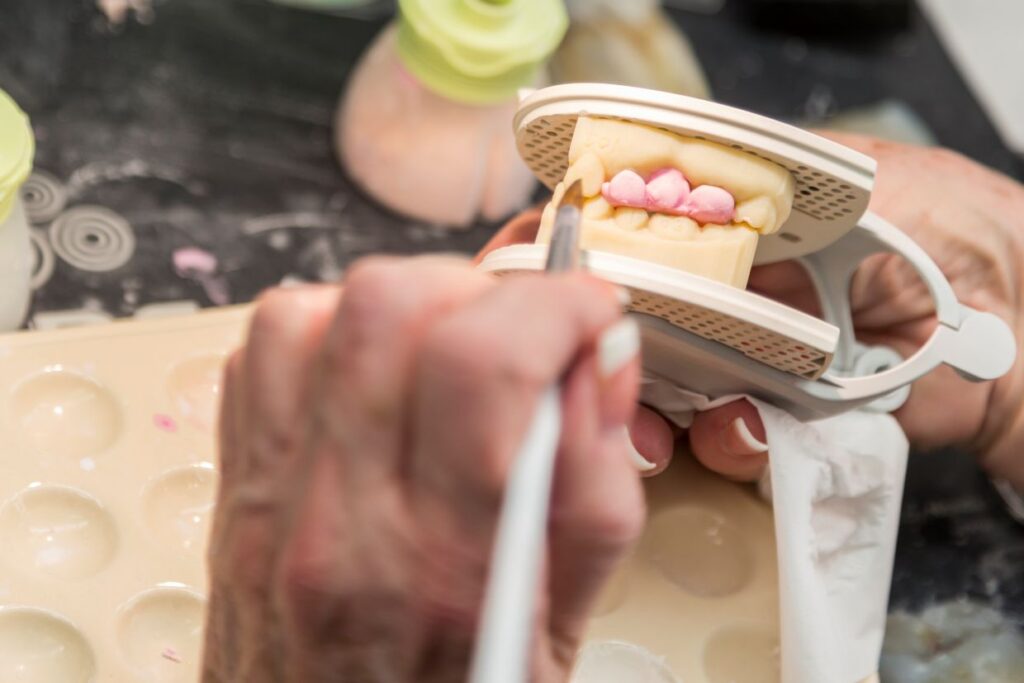
Dentures at this office are fabricated by a partner dental lab. That lab process allows the denture to be made for the individual patient rather than pulled from a one-size-fits-all solution. Your appointments may include exams, impressions or scans depending on the stage of care, bite records, shade discussions, try-in steps, and adjustments. The exact process depends on the type of denture and whether extractions, implants, or other treatment are involved.
Finding the Right Fit Over Time
Dentures often require an adjustment period. It can take time for the mouth, muscles, and bite to adapt. Changes in the gums and bone can also affect how a denture fits over time, especially after recent tooth removal. Follow-up visits are important because sore spots, looseness, or bite concerns can often be improved with appropriate adjustments.
If you already wear dentures and are unhappy with fit or stability, Dr. Dubina can evaluate whether a new denture, adjustment, reline, or implant-supported option may be worth discussing. The goal is to recommend a practical plan that supports your comfort and daily function.
When to Ask About Dentures
A denture consultation can be helpful if you are missing several teeth, wearing an older denture that no longer feels stable, or preparing for extractions and want to understand replacement options before teeth are removed. It can also help patients compare a traditional denture with an implant-supported option. The best choice depends on oral health, expectations, and the type of support available in the mouth.
We will walk you through the advantages and limits of each option in plain language. If a denture is recommended, we will also talk through maintenance, follow-up, and how your denture may need to be adjusted as your mouth changes over time.
Comfort, Function, and Follow-Up
The fit of a denture affects more than appearance. It can influence chewing, speech, sore spots, and overall confidence. That is why follow-up and adjustment visits are a normal part of denture care, especially after extractions or when the mouth is changing.
If a denture feels loose or uncomfortable, patients should call rather than trying to adjust it themselves. Small changes made by the dental team can often improve comfort and help protect the gums and supporting tissues.
A Practical Conversation, Not a One-Size-Fits-All Answer
Denture care can be personal. Some patients are replacing teeth for the first time, while others are trying to improve the fit of an older denture. The conversation should account for comfort, daily function, appearance, maintenance, and what feels realistic for the patient over time.
Frequently Asked Questions About Dentures
How do I know if I need full or partial dentures?
Full dentures replace a complete upper or lower arch, while partial dentures replace several missing teeth when some natural teeth remain. An exam helps determine which option fits your mouth and long-term goals.
Will my dentures need adjustments?
Yes, dentures often need follow-up adjustments, especially after extractions or as the gums and bone change over time.
Can dental implants help my denture feel more stable?
For some patients, implant-supported dentures may provide added stability. An exam and conversation help determine whether implants are appropriate.
Talk With Us About Denture Options
Need a practical way to replace missing teeth? Call today or send us a message to talk about denture options that fit your mouth, goals, and comfort.