

Dental Bridges in Ste. Genevieve, MO
Filling the Space Left by Missing Teeth
A dental bridge can replace one or more missing teeth by using nearby teeth or dental implants for support. Missing teeth can affect chewing, speech, appearance, and the way remaining teeth share biting forces. For some patients, a bridge offers a practical way to restore a missing tooth area without using a removable appliance.
At Ste. Genevieve Family Dental Care, bridge treatment starts with an exam and a conversation about the options available. A bridge may be a good solution when the supporting teeth or implants can provide enough stability and when the design fits the patient’s oral health needs. In other cases, an implant, partial denture, full denture, or referral may be the better recommendation.

Bridge Options
The practice offers traditional bridges, cantilever bridges, and implant-supported bridges. A traditional bridge typically uses teeth on both sides of the missing tooth space for support. A cantilever bridge gains support from one side in selected situations. An implant-supported bridge uses dental implants rather than natural teeth as the main support. The best fit depends on the number of missing teeth, the location of the space, the condition of nearby teeth, bite forces, and available bone support.
A bridge changes how the missing tooth area is supported, so planning matters. The health of the surrounding teeth, gum tissue, and bite is reviewed before a bridge design is recommended. If the adjacent teeth already need crowns, a traditional bridge may be worth discussing. If the neighboring teeth are healthy and the patient has enough bone, an implant may also be part of the conversation.
Lab-Made Restorations and Long-Term Care
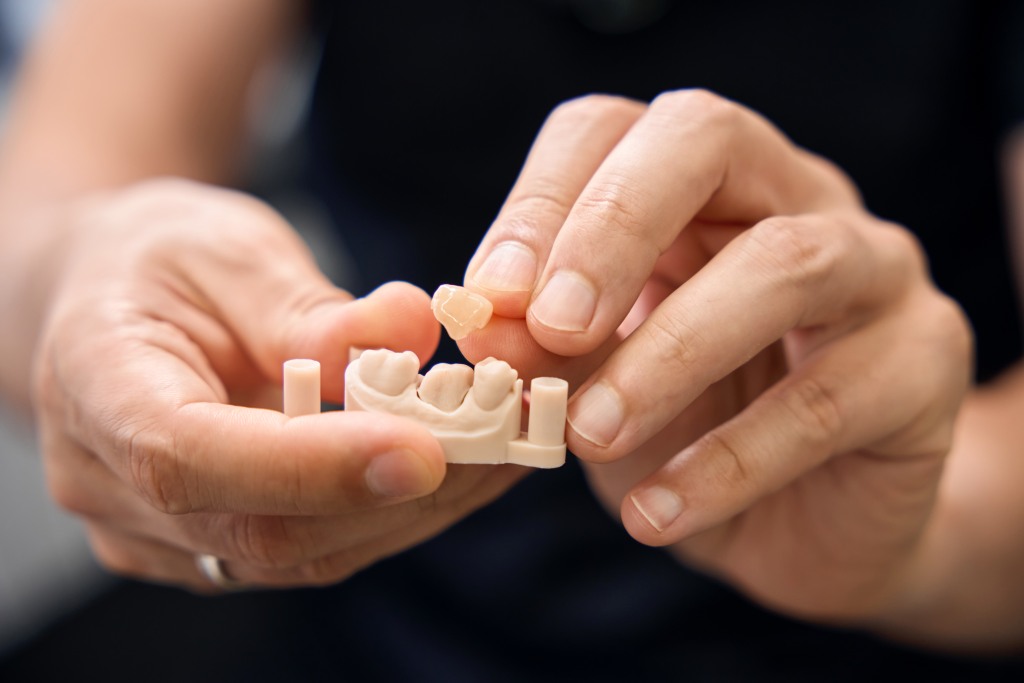
Dental bridges are fabricated by a partner dental lab. The lab process allows the restoration to be made for the patient’s mouth, bite, and treatment plan. Records may include impressions or scans, bite information, shade selection, and other details needed to create a restoration that fits properly.
After a bridge is placed, home care is important. Patients need to clean around and under the bridge, because the supporting teeth or implants still require maintenance. We will walk you through how to care for the area and what tools may help. Regular exams also allow the dentist to monitor the bridge, gums, bite, and supporting teeth over time.
Choosing Between Replacement Options
Many patients want to know whether a bridge, implant, or partial denture is the better choice. There is not one answer for every situation. A bridge may make sense when the surrounding teeth can support the restoration, while an implant may be considered when replacing a tooth without involving adjacent teeth. A removable partial may be more practical when several teeth are missing or when the treatment plan needs to stay more flexible.
During your visit, Dr. Dubina can explain how each option would work in your mouth. That discussion helps you understand the tradeoffs before choosing a direction.
Keeping a Bridge Clean
Cleaning around a bridge is different from cleaning a single natural tooth. Because the replacement tooth is connected to supporting teeth or implants, patients may need floss threaders, small brushes, or other tools to clean under the bridge and around the margins.
Home-care instructions are reviewed after the bridge is placed. Good cleaning habits help protect the supporting teeth, gums, and long-term function of the restoration.
Frequently Asked Questions About Dental Bridges
How do I know if a bridge is right for me?
A bridge may be worth discussing when one or more teeth are missing and nearby teeth or implants can support the restoration. The best fit depends on the health of the surrounding teeth, gums, bite, and bone support.
Are bridges made by a dental lab?
Yes. Bridges are fabricated by a partner dental lab.
Is a bridge better than an implant?
Neither option is automatically better for every patient. A bridge, implant, or denture may be recommended depending on your oral health and goals.
Ask About Replacing Missing Teeth
Ready to fill the space left by missing teeth? Contact our office to compare bridge, implant, and denture options in plain language.